Safeguarding youngsters is not a single policy or one-off rundown. It is a disciplined technique that resides in day-to-day choices, peaceful monitorings, great record-keeping, and well-timed discussions. When something really feels off, a trained adult picks up the strings, notifications patterns, and takes proportionate activity. That is what robust child protection understanding training intends to attain: construct the skills and confidence to identify early warning signs and act in line with the law and regional procedures.
I have dealt with colleges, very early childhood years services, young people programs, and sporting activity clubs that all believed they were doing enough, just to know their personnel needed more clear guidance on limits, reporting pathways, and documents. A strong child protection training course does not sink individuals in theory. It drills the practical: what to seek, what to claim, when to tape, who to call, and how to keep the youngster at the centre.
What reliable training covers
Child protection training must fulfill two tests. Initially, it requires to be aligned with regulations and jurisdictional guidance, including Division of Education and learning child protection training demands wherever relevant. Second, it should make sense to an instructor working at 3 pm, an instructor supervising lunch, a trainer on a weekend away game, or a volunteer running a vacation program. The most effective programs attach policy to the messiness of real life, where disclosures are partial, indicators are uncertain, and adults are busy.
Core content generally consists of protecting concepts, kinds of misuse and neglect, indications by age and developing stage, grooming behaviours, social and family members context, disclosure characteristics, legal and moral duties, obligatory coverage paths, documents requirements, information sharing, secure physical and on the internet environments, and reflective technique to decrease individual prejudice. When done well, these subjects move past interpretations to show how they play out in day-to-day contact with kids and young people.
For early childhood years, institutions, and out-of-school care services in Australia, you will certainly commonly come across the unit of expertise CHCPRT025 Identify and report kids and youths in jeopardy. This system underpins many child protection training courses and is offered as a CHCPRT025 online training course or combined option. Whether provided via a signed up training organisation or embedded in department professional knowing, the goal remains the exact same: develop reliable habits so that issues are picked up early and referred appropriately.
Recognising patterns rather than pinning whatever on a solitary sign
One swelling seldom tells an entire tale. A solitary late arrival does not equal disregard. Educating reinforces that you try to find advancing patterns and context. For instance, you could discover a seven-year-old that utilized to be chatty becoming withdrawn over several weeks, paired with frequent appetite and hoarding food. Or a young adult who unexpectedly stops joining sporting activity, becomes hypervigilant regarding phone alerts, and has new, unusual gifts. A lone indication invites inquisitiveness, while multiple indications across time need action.
I once coached a volunteer that flagged a youngster's repetitive belly pains every Monday. By themselves, stomach pains are common. However, combined with sleepiness, unwashed garments, and tense body movement when a specific grown-up gotten here, the photo was various. The volunteer logged monitorings, inspected inner procedures, and raised the issue. The resulting assistance strategy enhanced the kid's safety and security without jumping to accusations. That result took place due to the fact that the issue was dealt with as a pattern, not a one-off event.
Signs to look for throughout age groups
Physical, emotional, sexual assault, and neglect can present in different ways throughout ages and social contexts. Good child protection awareness child protection courses training furnishes you to think about advancement, disability, language needs, and community standards while maintaining safety and security paramount.
In very early youth, forget frequently shows as chronic health issues, unattended clinical problems, severe hunger, or developing hold-ups not regular with known clinical aspects. Emotional damage might look like relentless inconsolability or indifference to comfort. In key years, you may see too much compliance or aggressiveness, frequent injuries with irregular explanations, or a kid that ices up when touched. Teenagers typically show relational markers: unexpected seclusion from helpful peers, controlling connections with older individuals, unusual money or devices, on-line secrecy, and risk-taking that escalates quickly.
None of these verify harm by themselves. They are triggers to keep notes, examine the service's limit assistance, and, if needed, speak with the assigned securing lead or child protection coordinator.
The self-control of documentation
Memory is malfunctioning and impressions discolor. You shield children, and on your own, by composing clear, timely notes. Excellent documents are accurate, details, and devoid of judgment. Videotape what you saw or listened to, not what you think. Consist of dates, times, specific words where feasible, and any type of actions you took.
I have assessed event records that stated, "Child looked maltreated," which is virtually unusable. Contrast that with, "At 10:15 on 3 May, Sara showed up late. I observed a purple contusion about 3 cm on the left lower arm. When asked just how it occurred, Sara stated, 'I don't know, maybe I fell.' No loss was reported by classroom team." The 2nd instance offers a supervisor enough product to assess risk and decide on following steps. It additionally holds up if a situation employee or court later on reviews the file.
Handling disclosures with care
Children rarely disclose in clean, linear sentences. Disclosures can seem like a half-finished idea, an informal remark, or a behavioral outburst. In technique, the moment is brief, so your action requires to be consistent and simple.
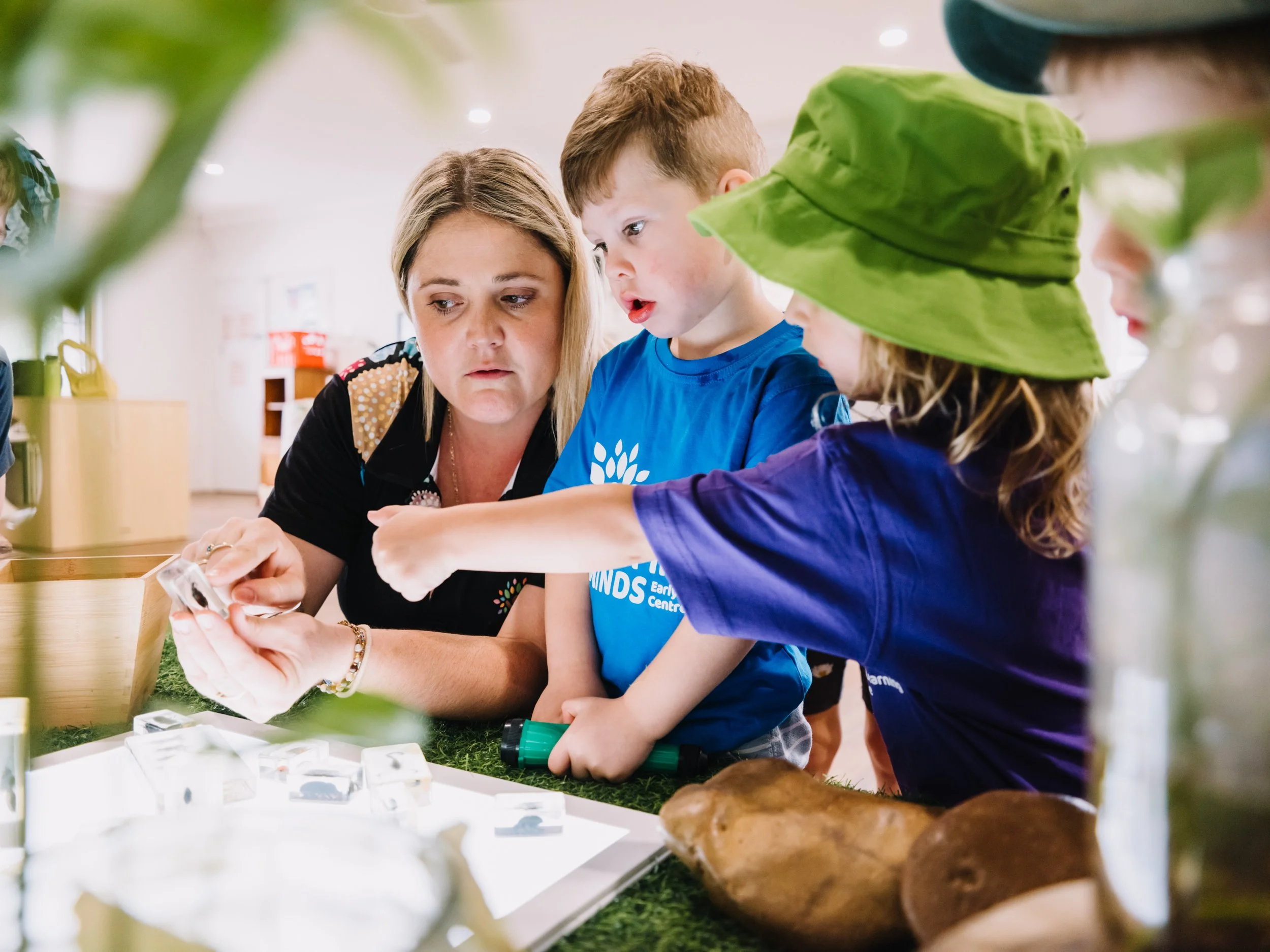
If a youngster begins to reveal, follow your training and your service's plan. Concentrate on security and quality, not examination. Allow the child established the speed. You might say, "Thanks for telling me. You did the right point," and "I require to share this with individuals who can help maintain you safe." Avoid leading concerns or promises of privacy you can not maintain. Then make an immediate, exact record utilizing the youngster's own words and alert the proper leader.

Good training provides expressions you can rely on under stress. Team that have rehearsed those lines are much less likely to over-promise or accidentally direct the child's account.
Mandatory child protection training and regulative context
In lots of jurisdictions, people that work with youngsters should finish obligatory child protection training at established periods. Colleges frequently access Department of Education and learning child protection training that aligns with statewide reporting expectations. Early youth setups commonly call for a child protection certification or documented specialist discovering linked to requirements. Youth and social work run under comparable regimes.
The specifics differ by state or area, so a national overview is constantly a simplification. Some jurisdictions require yearly refreshers. Others specify first conclusion with a shorter update cycle. If you remain in Australia and your function intersects with child protection responsibilities, consult your organisation's plan and the appropriate youngster safety authority for current demands. For teams preparing their schedule, it is sensible to publication child protection training 2025 dates currently, particularly for solutions that close over holiday periods or have seasonal personnel turnover.
The CHCPRT025 system and what it really teaches
The CHCPRT025 Identify and report youngsters and young people in danger device rests inside the broader CHC training package for social work and education support duties. A CHCPRT025 program normally covers threat indicators, legal commitments, replying to disclosures, organisational protocols, interagency cooperation, and record-keeping. Competency needs presentation, not simply presence, which is why assessments often involve circumstances, written jobs, or workplace observations.
People commonly ask if a CHCPRT025 certification is enough to satisfy employer demands. It depends. Lots of employers approve CHCPRT025 child protection training as a standard, but they still expect induction on local plans, details systems, social security, and the certain recommendation paths in your location. Consider the CHCPRT025 training as a transferable core. Your work environment induction adds the neighborhood map.
The flexibility of a CHCPRT025 online program assists solutions timetable training for informal or remote team. On the internet distribution works when it includes strong situations, interactive checkpoints, and a clear process for inquiries. That claimed, in person workshops afford richer conversation of delicate case studies and support for personnel who might be directly affected. Some services take a blended strategy: CHCPRT025 online for basics, then a brief on-site session to practice reporting actions with the neighborhood forms and contacts.
What a strong child protection program seems like in practice
In sessions that land well, participants talk through real issues. For example, an educator asks yourself if the duplicated, inexplicable late pickups are an overlook risk or a symptom of housing instability. An out-of-school care organizer comes to grips with a parent that appears intoxicated at pick-up. A trainer notices grooming-style boundary testing by a volunteer that demands private messaging. None of these scenarios fit a cool script. Training should model just how to evaluate indications, speak with plan, look for a 2nd view, and record your reasoning.
When choosing amongst child protection programs, seek trainers who do not rush past the gray areas. Ask whether the learning consists of role-play or structured technique, not simply slides. Validate that the training course explains the line between an interior problem and a reportable uncertainty. Personnel must leave understanding the difference in between immediate threat requiring immediate rise and lower-level worries that still call for written records and monitoring.
Culture, bias, and cultural safety
Effective child protection training recognizes the danger of prejudice. An instructor unfamiliar with a household's social practices might misread a parenting design, while an instructor from the exact same community as the household might hesitate to report as a result of be afraid of creating injury. Predisposition reduces both means. It is an expert obligation to interrogate our assumptions.
Cultural safety and security is not a fig leaf for avoiding tough decisions. It is a discipline that looks for to safeguard children while appreciating identity and neighborhood. For Indigenous and Torres Strait Islander kids, for instance, training should cover historical trauma, the significance of kinship treatment, and just how to consult social consultants without delaying immediate activity. Similar principles apply across culturally and linguistically diverse communities. In each case, social understanding educates threat evaluation; it does not bypass it.
Working with digital threats and online grooming
Children invest huge parts of their day connected to devices. On-line damage does not regard college entrances or childcare fencings. Child protection online training progressively includes brushing characteristics in messaging applications and games, forceful sexting, image-based abuse, and doxxing. Staff need to understand exactly how digital practices intersects with offline indicators. A kid that ends up being nervous when divided from a phone may be safeguarding a regulated communication channel. Sudden night-time sharp fatigue can indicate harassment or exploitation.
Policies ought to define just how devices are managed on site, what authorization is needed for images, exactly how to save and erase media, and when to rise online security concerns to the pertinent authority. Documentation still matters. Screenshots, days, and usernames can assist expert groups act quickly.
Building secure atmospheres, not just good responses
Responding well is necessary, yet avoidance is much better. Safe environments decrease chances for damage. Start with visibility. Team avoid one-on-one closed-door circumstances where practical. Activity spaces are well lit and overseen. Standard procedures draw intense lines around physical call, gift-giving, social media sites links, and transport. Inductions make these borders explicit.
Safe recruitment is one more pillar. Interviews probe attitude toward expert limits, not just technological skills. Reference checks exceed verification of work dates. Where permitted, solutions full dealing with kids checks child protection awareness training for staff or comparable testing. Re-verification is scheduled, not entrusted to memory. When you add these aspects to solid training, you create a setup that hinders high-risk behaviour and equips staff to speak out early.
Reporting in the real world: thresholds and timing
One of one of the most usual anxieties is getting the threshold wrong. People worry about making a report that ends up being unsubstantiated, or concerning missing out on something significant. Educating tackles that concern by explaining that the obligation is to report a sensible uncertainty based upon signs, not to show misuse. Authorities analyze, triage, and explore. Your role is to discover, document, seek advice from, and refer according to policy.
There are times when you escalate instantly: present injuries with clear threat, disclosures of major damage, a qualified risk to safety and security, or a risky pick-up circumstance. Other times, you record and speak with, particularly when indications are moderate or ambiguous. A supervisory conversation is not a way to bury a problem. It is a check to ensure the action is symmetrical and aligned with the regional procedure.
Supporting personnel wellbeing
Child protection work is emotional. Listening to a disclosure or carrying a major bother with a trainee sits with you. Solutions that do this well construct debrief pathways. After a report, the staff member is not left at night. Supervisors clarify what can be shared, what can not, and provide follow-up where ideal. Training should name additional trauma, offer approaches to manage it, and signpost confidential assistance options.
I have actually seen exhaustion diminish teams' alertness. People ignore as a type of self-protection. Normal, top quality refresher courses, reflective guidance, and a culture that notices the not-okay moments assist staff stay mindful without becoming overwhelmed.
The shape of a sensible training day
A well-structured child protection training course balances content and practice. In the morning, you construct shared language and evaluation vital responsibilities. Midday, you deal with case studies, honing monitoring and paperwork. After lunch, you practice disclosure responses and run through the service's reporting flow, with types and get in touch with factors open on the table or display. The last sector covers record storage space, personal privacy, details sharing, and how to revisit or escalate concerns.
When delivering CHCPRT025 training, trainers frequently map the system's efficiency requirements to these activities so participants can see just how their involvement proofs expertise. If analysis consists of office presentation, the instructor coordinates with a supervisor to observe application on duty, such as finishing an event record appropriately or complying with the inner alert process.
Choosing and making use of a provider
There are numerous child protection courses in the market, from extensive credentials to brief refreshers. Search for a child protection training certificate that is acknowledged by your sector and that links to the ideal level of responsibility. A child protection training course for childcare ought to talk with proportions, toileting, rest routines, and family connections in very early learning settings. A school-focused program must align with departmental coverage paths and address obligation of treatment in the class and excursions.
For teams with blended duties, take into consideration a tiered technique. Leaders may require extra material on handling allegations versus staff, media rise, and liaison with external firms. Frontline personnel requirement clear steps for documenting, rising, and keeping boundaries. Volunteers benefit from a concise induction that covers trick indications and immediate reporting steps, with paths to much deeper training where their function expands.
Two portable checklists you can utilize tomorrow
- Immediate feedback to a disclosure Listen without disturbance, say thanks to the youngster, and avoid leading questions Clarify just what is necessary for security and prompt support Explain you have to share the info with individuals who can help Record exact words, time, date, and your observations as soon as possible Notify your marked protecting lead and follow the coverage procedure Quality of your written record Stick to realities and straight quotes, prevent presumptions or labels Include date, time, area, and names of witnesses or involved staff Note any kind of activities taken and by whom, including who you informed Attach appropriate artifacts where plan permits, such as screenshots Store according to policy in safe systems, not individual devices
These checklists do not replace training. They assist anchor practice while you schedule the next session or tune your procedures.
Keeping training alive after the workshop
Learning fades if it remains in a binder. Build regimens that rejuvenate expertise and keep everybody aligned. Start staff meetings with a two-minute situation. Rotate that reads the standard procedure area on limits. Update your call list for regional child protection authorities and examination access to on the internet coverage portals. New staff ought to finish induction within their first shifts, not weeks later.
A useful move is to arrange child protection training 2025 dates early, after that backfill with brief microlearning every quarter. For example, a 20-minute refresher course on paperwork in term 2, a personal privacy and information-sharing upgrade in term 3, and a supervision session on online dangers before the holiday season. This spaced technique maintains the subject live without straining calendars.
What modifications when training is done well
You notice earlier. Team talk to more confidence concerning thresholds. Records enhance. Leaders area inquiries before dilemmas struck. Kids sense they can talk with adults who listen and act. Audit results show policies in practice, not on paper. Outside firms react faster because your records are total and well written. The distinction shows up in little, daily communications: an educator that gently names a border, a coach that relocates a discussion to a public location, a teacher who logs a pattern as opposed to rejecting it.
I have actually enjoyed solutions change from responsive to aggressive within a year of purchasing consistent, premium child protection course distribution and embedding that learning into regimens. They did not get rid of all threat. They did construct a culture where issues are discovered and acted on with care.
Final ideas for leaders and practitioners
If you are in charge of a team, established the tone. Pick an identified child protection online training program or companion with a carrier that can deliver on website. Map CHCPRT025 recognize and report children and youths at risk to your internal procedures so personnel see the throughline from plan to exercise. Make certain every personnel, including volunteers and contractors, has a current child protection training certificate or comparable proof. Keep your reporting pathways noticeable, your documentation requirements high, and your guidance supportive.
If you work straight with children, count on your instincts, after that test them with proof. Notification patterns. Maintain records. Request for a second opinion early. When a child shares something hard, be the stable adult that pays attention and follows through. That steadiness comes from prep work. Training gives you the words, the steps, and the self-confidence to act.
Child protection recognition training is not a box to tick. It is a shared self-control that, succeeded, improves safety, hones judgment, and makes sure that when a youngster requires help, the adults around them recognize specifically what to do.